
Finding People Through Laguna Hills Records
A Laguna Hills residents directory search works best as a sequence, not as one all-purpose roll. Orange County is the essential people-record jurisdiction because the county keeps the assessor, recorder, elections, court, vital-record, and probate systems. Laguna Hills adds city clerk, permit, planning, and engineering files. The library and archives fill the historical gaps. A name can start the search, but an address, APN, spouse, middle initial, business number, or older place name is what separates one record from another.
The first result may show ownership, a filing party, a court event, or an authenticated voter record. None of those labels means every person at a home is exposed. Unlisted household members, children, roommates, utility customers, DMV addresses, confidential voters, and people covered by Safe at Home are outside an ordinary property map. Treat the directory as a set of source trails, then confirm a point with the office that holds the record.
- Write down the full name, spelling variants, likely era, and any known Laguna Hills address.
- Use the Orange County Assessor gateway or parcel map to separate situs from the owner mailing address.
- Search RecorderWorks in both grantor and grantee roles, save the instrument number, and request a copy only after the index identifies the document.
- Use Orange County Superior Court, vital-record applications, business filings, or license records for a second, independent clue.
- For older residents, search El Toro, Moulton Ranch, and unincorporated Orange County, then ask the library or archives about the exact volume.
That sequence keeps a current owner, a past resident, and a person with the same name from being blended into one false entry.
Note: A Laguna Hills residents directory search should record the source date because public indexes, portal coverage, and office procedures change.
Laguna Hills Resident Records Offices
The Orange County Clerk-Recorder is the central deed and vital-record counter for Laguna Hills. Its South County Branch sits inside the Laguna Hills Civic Center and handles real-property recording, marriage licenses, vital records, fictitious business names, and notary registrations. The city clerk is a separate route for municipal elections, agendas, ordinances, contracts, planning files, permits, and administrative records. Orange County Superior Court handles state trial matters because Laguna Hills does not operate a conventional municipal court.
Orange County Clerk-Recorder
Laguna Hills Civic Center, 24031 El Toro Road, Suites 150 and 160
Laguna Hills, CA 92653
Open Monday-Friday, 9 a.m.-4:30 p.m.
Laguna Hills City Clerk
City Hall, 24035 El Toro Road
Laguna Hills, CA 92653
949-707-2630; Monday-Thursday and alternate Fridays, 8 a.m.-5 p.m.
Orange County Assessor
Public-service counter, 500 S. Main Street, second floor
Orange County, California
Owner information is available at the public counter
Parcel maps and the property information gateway appear in the property section below.
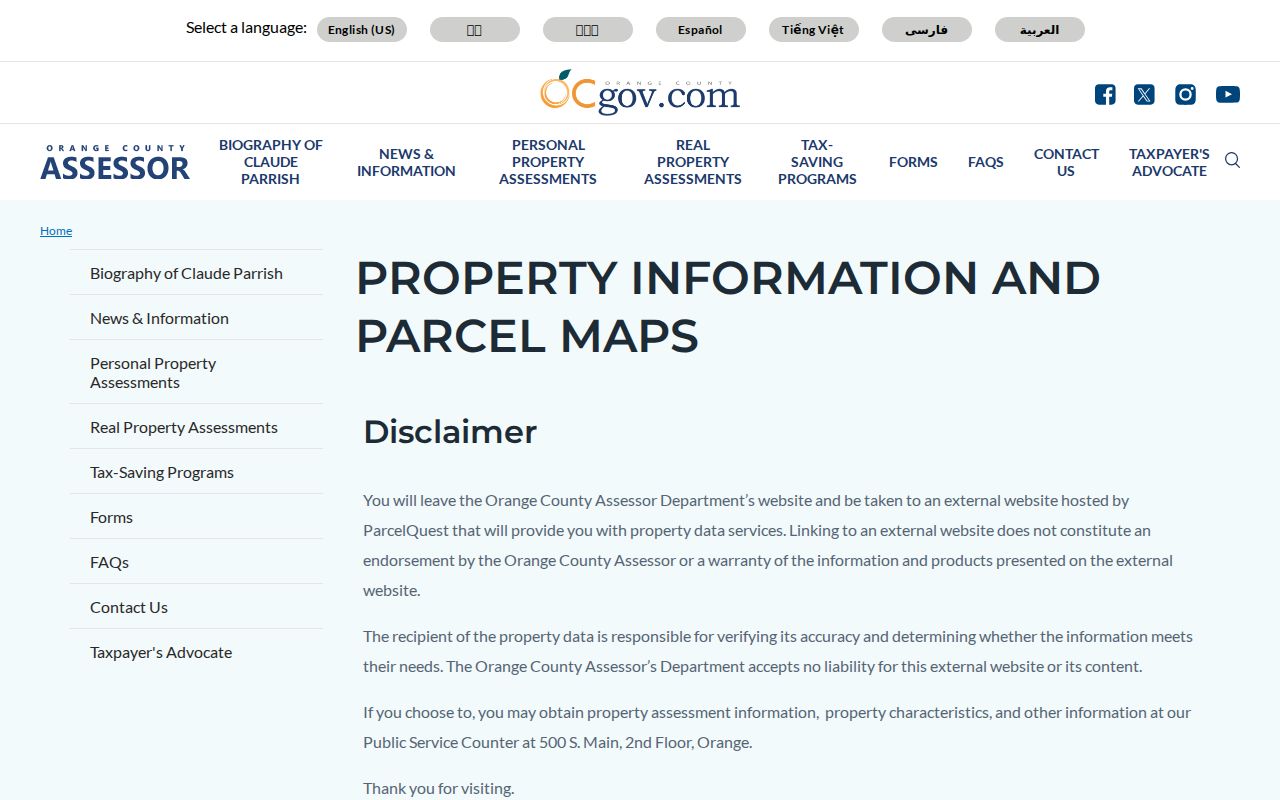
The South County branch can save a Laguna Hills researcher a trip to Santa Ana, but the online and counter rules differ by record. RecorderWorks is a free index and not a deed-image viewer. The assessor site sends users to ParcelQuest and warns that the external data host is not warranted; an owner-name roll is not promised online. The city’s public-records portal can route a request to the right department when a permit, planning file, or contract is not posted.
Note: Santa Ana remains the Orange County seat, while the Laguna Hills Civic Center supplies a closer Clerk-Recorder counter for several services.
Laguna Hills Address, Name, or Place
An address and a name lead to different parts of the Laguna Hills residents directory. An address is strongest for the assessor, GIS, city permit, planning, and tax systems. A name is strongest in RecorderWorks, court indexes, business filings, professional license searches, and historical directories. When both are available, keep them in separate columns in your notes. The property’s situs is the parcel location. The mailing address is where tax correspondence goes. A mismatch can reflect a trust, agent, second property, or mailing choice. It does not prove who lives at the situs.
Older work needs a third clue: place name. Laguna Hills incorporated on December 20, 1991, after the area’s ranch and suburban development. Earlier records may say El Toro, Moulton Ranch, or unincorporated Orange County. Nearby place names such as Laguna Beach, Mission Viejo, and San Juan Capistrano may appear in a directory or newspaper search because historical coverage followed postal communities rather than today’s boundary.
- Roll
- A recurring list maintained for an official purpose, such as an assessment roll or voter file. It is not a complete list of household members.
- Index
- A finding aid with names and document details. An index points to a record but may not include the record image.
- Parcel
- A mapped piece of land identified by an APN and legal description. One parcel may hold more than one structure or household.
- Criss-cross directory
- A historical directory arranged by street or address rather than only by surname. Verified Laguna Hills-specific years were not located.
From Laguna Hills Parcel to Recorded Deed
The assessor and GIS layer make the property trail legible. Start with the normalized street address or APN, capture the situs, and note the tract, lot, and legal description. Then open the current owner in the Orange County RecorderWorks Grantor-Grantee Index near the acquisition date. Search that person as grantee to find the purchase instrument, read the seller as grantor, and repeat. The recorder index identifies the parties, recording date, document type, and instrument number, but it does not show deed images.
The Orange County Assessor property information gateway is the official route to parcel maps and the ParcelQuest notice.
That free index is the hinge between discovery and a useful copy. Orange County staff state that they do not conduct a caller’s search. Once the instrument is identified, use the county’s official-record copy instructions. Copies are listed at $1 per page plus $1 certification per document or map. For a pre-1982 instrument, book, page, and instrument details make the request more efficient. A copy can supply the legal description, signatures, vesting, return address, notary acknowledgment, transfer-tax notation, and recording stamp, subject to redactions.
The deed trail is evidence of a transaction and a legal parcel. A grantor or grantee is not automatically a resident. A deed to a trust may hide the people behind the ownership structure, and a quitclaim deed is not necessarily a sale. Keep the property chain separate from a household claim.
RecorderWorks is especially useful when a street search reaches a dead end. A changed number or old place name may not appear in a current address field, but the legal description can persist across instruments. The detailed street-by-street chain belongs on the Laguna Hills by-street page.
Note: The recorder’s index confirms a document trail, while the purchased copy confirms what the recorded instrument actually says.
Current Laguna Hills Resident Sources
Several sources look like a local directory, but each has a specific purpose. The assessor connects an owner or assessee to a parcel and tax mailing destination. The voter tool authenticates a person’s own registration. RecorderWorks names parties to recorded documents. Court Access connects a name to a case event. City files show applicants, contractors, owners, and public participants in a project. The table keeps those roles distinct.
| Source | What It Shows | Keeper | Access |
|---|---|---|---|
| Assessor parcel record | APN, situs, owner or assessee, mailing address, characteristics | Orange County Assessor | Gateway and public counter |
| Recorded-document index | Grantor, grantee, date, type, instrument number | Orange County Clerk-Recorder | Free index; copy request after search |
| Voter self-lookup | One voter’s status, address confirmation, districts, ballot tracking | Orange County Registrar of Voters | Self-authentication only |
| Superior Court case access | Party roles, case events, hearings, disposition, document descriptions | Orange County Superior Court | Known case route; paid name search |
| City records and permits | Applicants, owners, contractors, project address, inspections | Laguna Hills | Portal or targeted CPRA request |
A source that lists a person is not necessarily a current resident directory. The safest match joins two stable details, such as a name and legal description, a name and spouse, or an entity number and business address. Sensitive identifiers should not be copied into notes. Public records can be corrected only by the custodian.
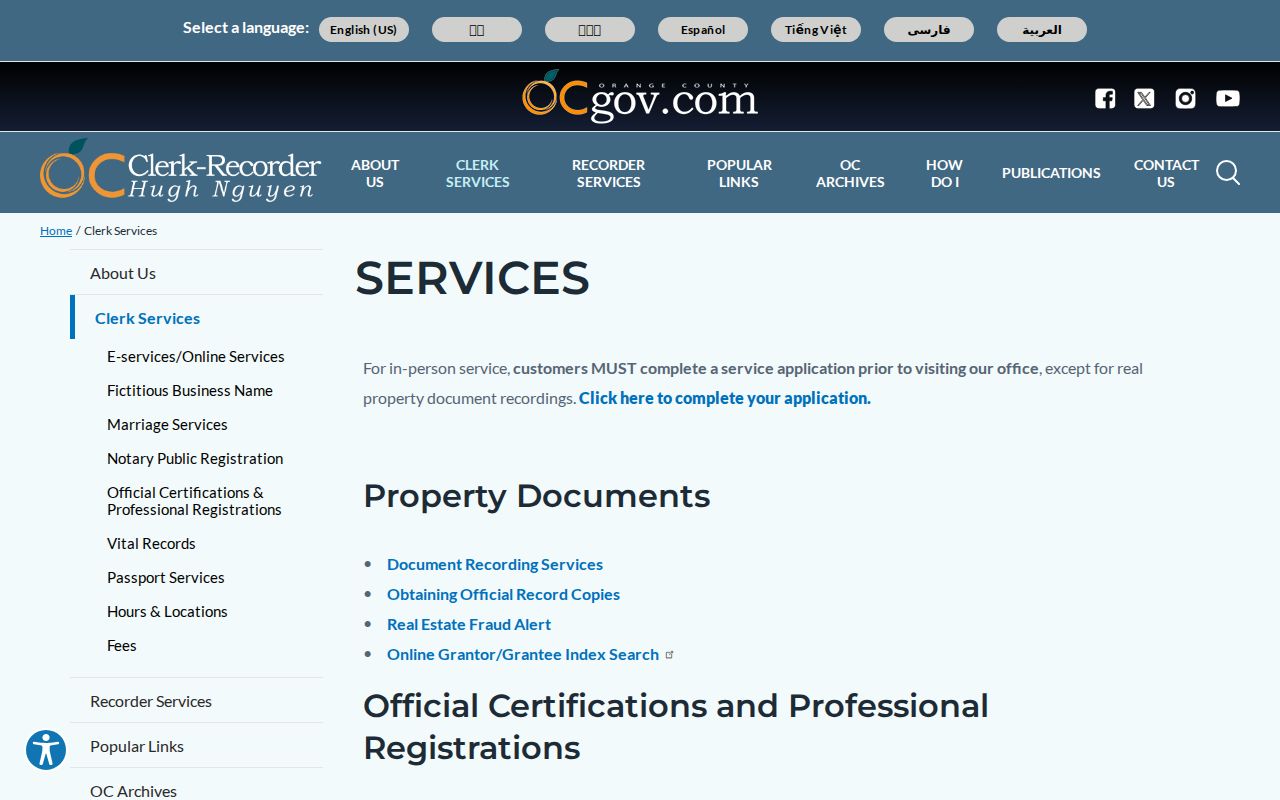
Orange County’s Clerk-Recorder service inventory also includes public marriage records, birth and death registrations, fictitious business names, and notary services. Those records can corroborate a family or business connection, but access rules vary.
Why Laguna Hills Voter Lookup Is Private
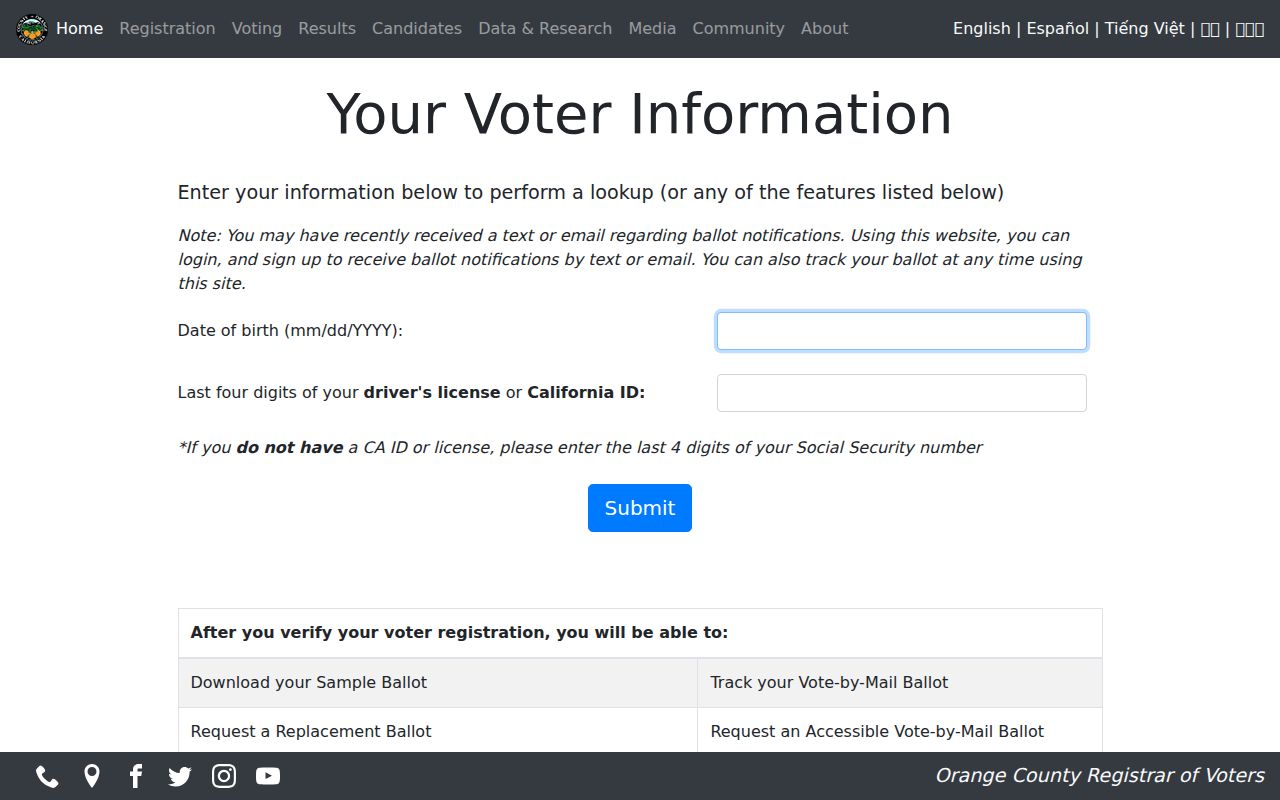
The Orange County Your Voter Information tool is a self-authentication service, not a public Laguna Hills residents directory. It asks for a full date of birth, the last four digits of a California driver license or ID, or the last four digits of a Social Security number, and the first three letters of the first name. After authentication, the voter may see registration status, mailing address, party, history, districts, elected officials, ballot tracking, and address confirmation.
That design matters. It allows a voter to check a record without offering an open name-to-address browse for neighbors. A separate countywide voter-file request is regulated under Elections Code section 2194 and Government Code section 7924.000. The application asks for a lawful election, political, scholarly, journalistic, or governmental purpose, a wet signature, identification, supporting material, payment, and acknowledgments of the use limits. A commercial-purpose directory is not the permitted route.
| Self-lookup field | Full date of birth, last four of driver license or California ID, and first three first-name letters |
|---|---|
| Self-lookup result | Status, mailing address, party, history, districts, officials, ballot tracking, and address confirmation |
| File request | Applicant, organization, purpose, credentials, security measures, product, payment, shipping, signature |
Note: Voter history shows participation in an election, never how a person voted, and a protected address may be withheld.
The Orange County voter lookup is the relevant official starting point for a voter’s own record.
California Vital Copies for Laguna Hills Research
Birth, death, marriage, and divorce records are useful identity anchors, but California does not use one simple age-based opening rule. The Orange County Clerk-Recorder handles local birth, death, and public marriage copies. The California Department of Public Health is the statewide backstop. Authorized certified copies require statutory eligibility and a notarized sworn statement. Most people outside that group can request an informational copy, which carries a nonidentity legend and may redact sensitive fields.
The 2026 state fee schedule lists $31 for birth, $26 for death, $19 for marriage, and $18 for dissolution certificates. Orange County’s 2026 birth fee is listed as $34, while death and marriage are listed as $26 and $19. A county request may be faster for a recent Orange County event. State mail applications go to CDPH-Vital Records in Sacramento; CDPH does not pre-check whether a record exists, retains the fee when no record is found, and sends a Certificate of No Public Record when appropriate.
Use a vital record to confirm a relationship or event, not to turn a private family fact into an open resident list. Confidential marriages, sealed adoption records, confidential birth sections, and specified amendments have distinct restrictions. An older event may be indexed under El Toro, county territory, Mission Viejo, Laguna-area place names, or the hospital location rather than the modern city name.
CDPH Vital Records provides the statewide application route and authorized-versus-informational guidance. The Orange County office remains the practical local custodian when the event was registered in the county.
Laguna Hills Business and License Cross-Checks
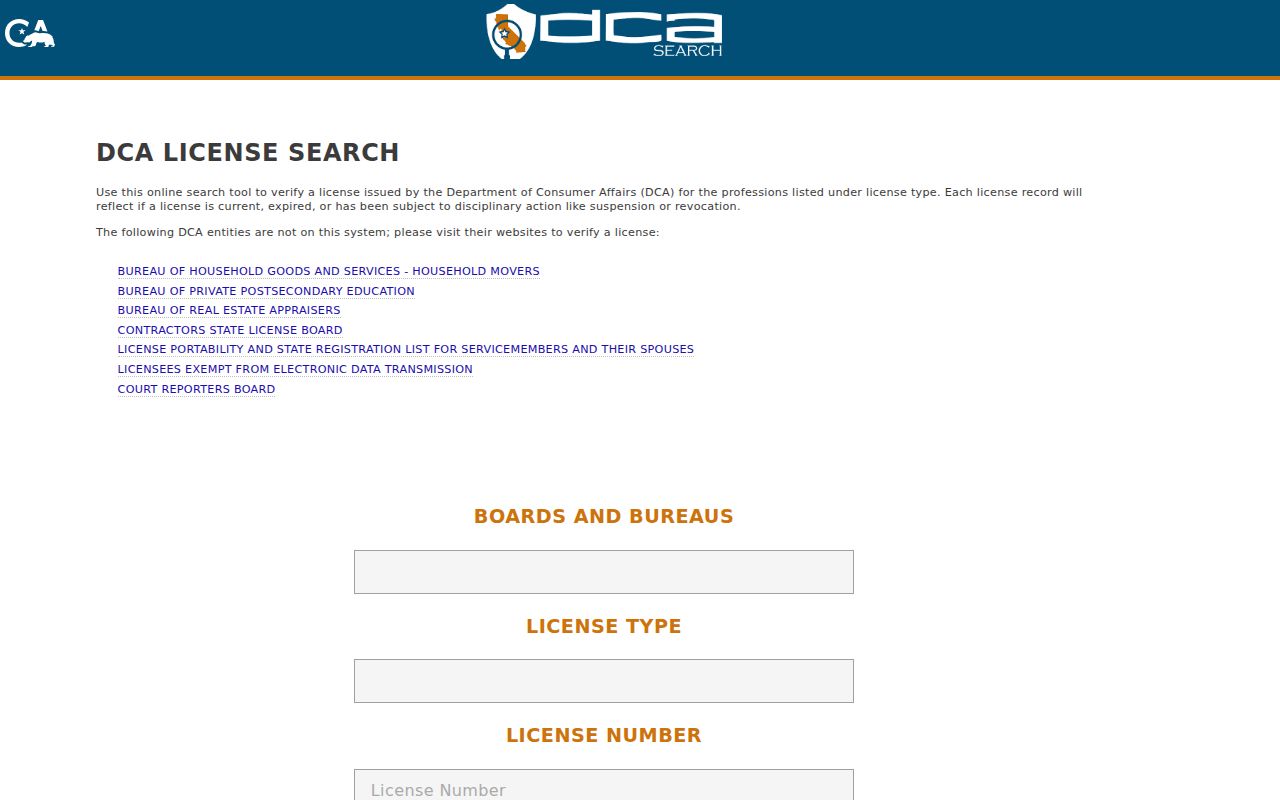
When a name search needs a nonproperty corroborator, official business and professional sources can help. California Secretary of State bizfile results may show entity number, status, formation date, agent for service, addresses, officers or managers, and filing history. The Department of Consumer Affairs license search can show a licensee name, number and type, status, issue or expiration dates, public address where permitted, and discipline links. Orange County fictitious-business-name records add a local DBA trail.
These are affiliations, not home records. A business address can be a storefront, agent, or office. A license may show a public address that the licensee does not occupy. Match the entity number, license number, professional board, or filing date before using the result as a second clue. Do not infer a household from a business filing.
The California bizfile search shows the official business-entity route for a name or entity number.
Business filings and professional licenses answer different questions, so compare their identifiers before moving from an entity to a person.
Use the California Department of Consumer Affairs license search for a professional record that can be checked against a name variant.
When Laguna Hills Records Are Not Online
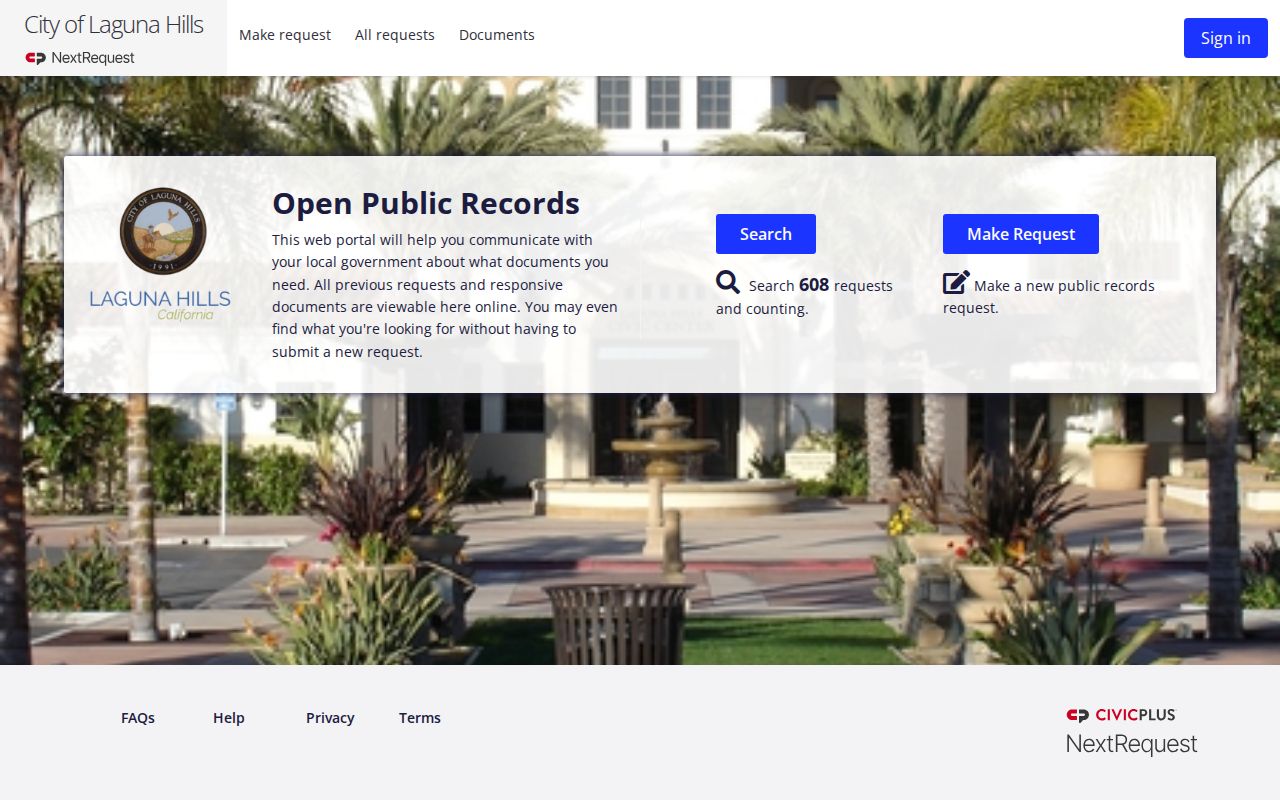
Online access is only one channel in the local record trail. The city’s California Public Records Act route accepts a targeted description with date range, department, address, project, case number, and known identifiers. The city says its current request portal lets a requester search prior requests before filing. Under the CPRA, the agency generally makes an initial determination within ten days, with a possible written fourteen-day extension for unusual circumstances. Inspection is generally free; direct duplication can cost money, and exempt material may be withheld or redacted.
Use the fallback that fits the record. The RecorderWorks index leads to a copy request by mail or counter. Older recorder material may need book, page, and instrument details, with Orange County Archives as a bridge. Superior Court indexes and copy requests can remain at a justice center. The Laguna Hills Library offers public computers, Wi-Fi, catalog access, genealogy resources, newspapers, and telephone-book research. Staff help is valuable when a branch’s exact directory years are not published.
The city records request should not ask an agency to create a new dossier. Ask for an existing permit, planning file, agenda, notice list, contract, or correspondence set. If the city does not hold the record, its request guidance points people to the Clerk-Recorder, Superior Court, Assessor, Orange County Sheriff, OCFA, or another named custodian.
The Laguna Hills public-records request portal is the city-side fallback for existing municipal files.
Note: A ten-day CPRA determination is a response deadline, not a promise that a complete production will arrive within ten days.
Laguna Hills Court Records for One Person
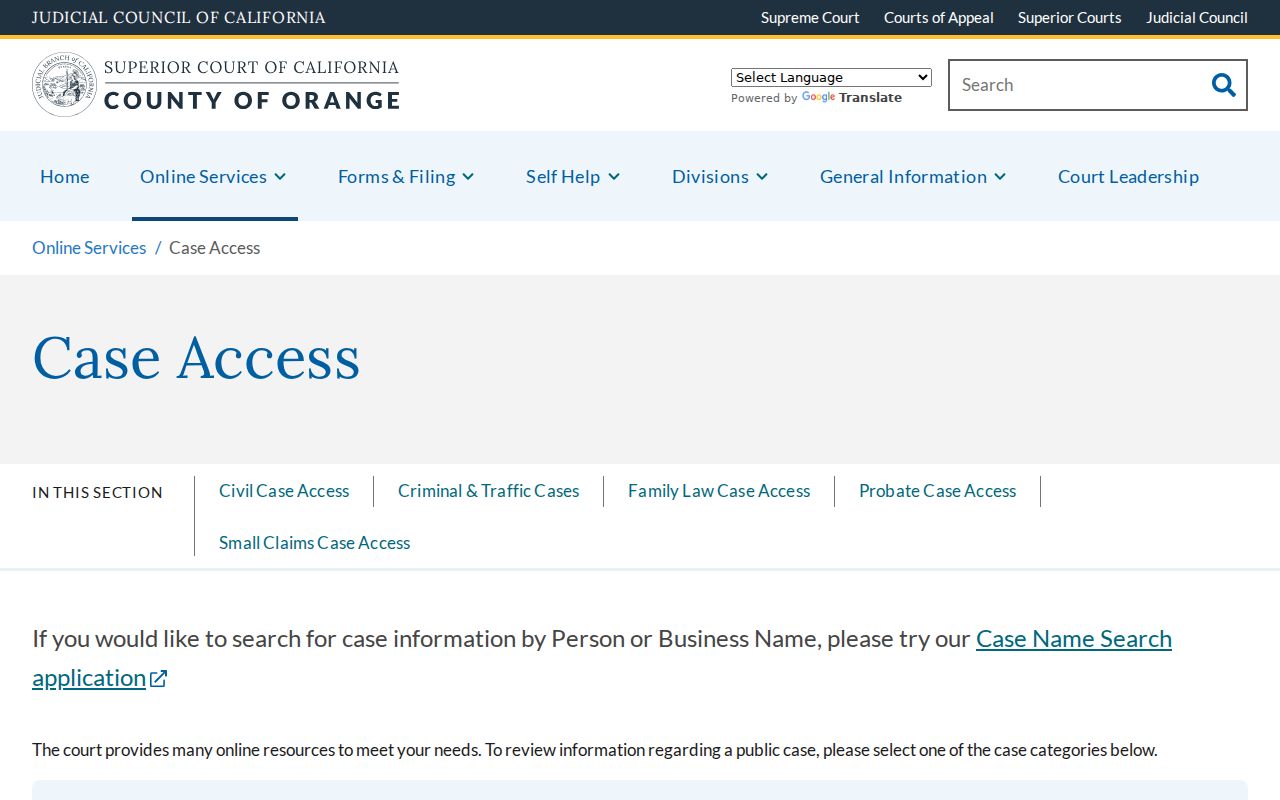
Orange County Superior Court’s Case Access separates civil, criminal and traffic, family, probate, and small-claims routes. A known case number is the efficient path. A person or business name search is a registered paid service. The published credit schedule lists $1.50 for one search credit, $5 for five, $9 for ten, $70 for seventy-five, or $400 for thirty days of unlimited use. Online data are not the official court record, and sealed, juvenile, adoption, and protected family-law material may be unavailable.
Visible case results may include a case number and title, filing date, case type, courthouse, judicial officer, party names and roles, register-of-actions events, hearings, disposition, status, and document descriptions. Criminal and traffic data can take time to appear, and a name-case association may not be accurate. A docket is a running event history, not a current address proof.
The Orange County Superior Court Case Access page identifies the case categories and name-search route.
Laguna Hills Family History Leads
A residents directory can serve a human purpose without treating personal data as a commodity. Probate petitions and notices may identify a decedent, petitioner, nominated representative, heirs, and counsel. Obituaries can connect a former Laguna Hills resident to relatives, a funeral home, cemetery, or organization, but they are secondary evidence. Verify a death event with the custodian and use the probate docket for the legal role.
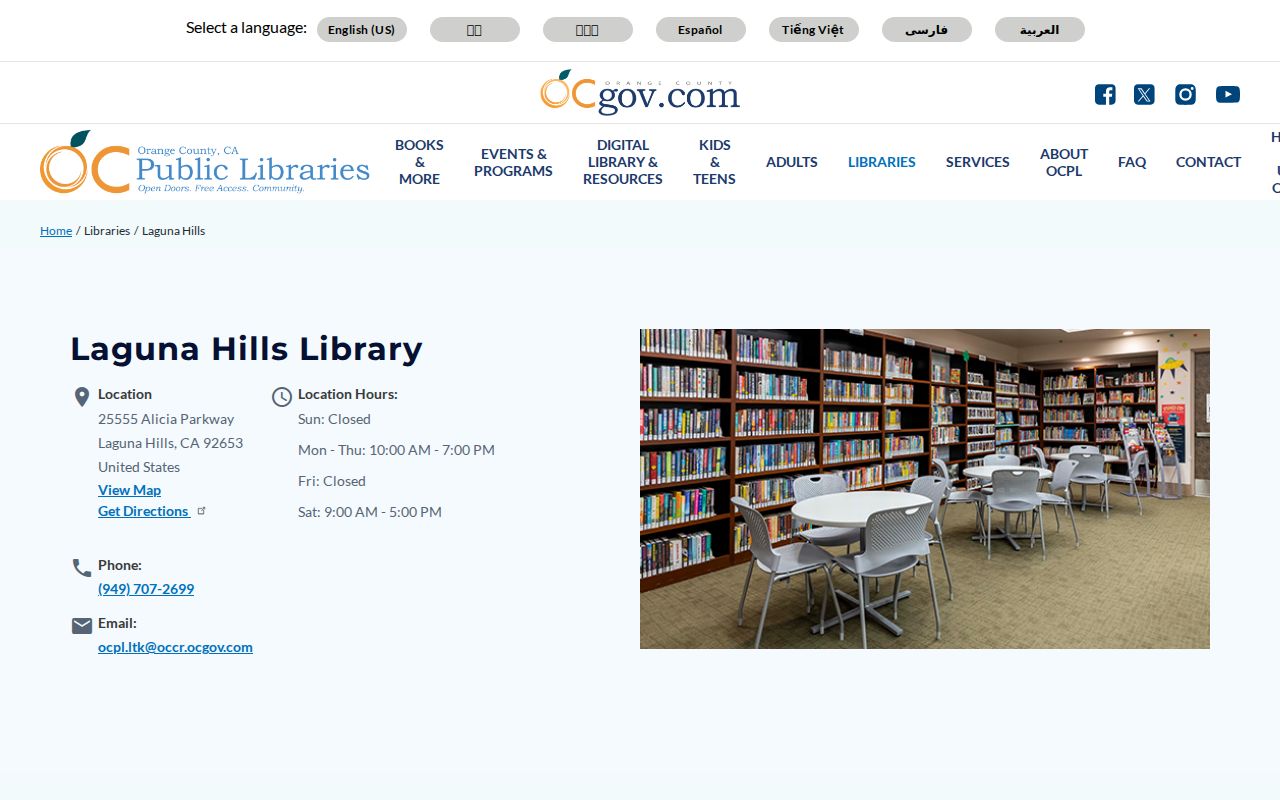
For a former classmate, start with school yearbooks, library catalog records, local newspapers, and historical collections. The Laguna Hills Library provides public terminals and licensed genealogy resources, including Ancestry Library Edition and HeritageQuest. The branch’s multilingual collection also makes it sensible to test surname order, diacritics, initials, anglicized spellings, spouse names, and address clues.
The Laguna Hills Library branch page confirms the local computer and collection access point for genealogy research.
Adoption questions require California’s official adoption-information and court processes. They should not be solved by trying to defeat sealed records. Family history is stronger when each clue has a date, a source, and a clear limit.
Protected Laguna Hills Addresses and Records
Some people will not appear in an ordinary residents directory because the law protects the underlying record. California Safe at Home supplies a substitute mailing address and confidential mail forwarding for qualifying survivors and certain reproductive-health participants. Voter home addresses, phones, emails, and identifiers receive statutory limits. The federal Driver’s Privacy Protection Act restricts DMV personal information. Vital records distinguish authorized from informational copies, and adoption, juvenile, sealed, and confidential records have separate rules.
The California Secretary of State Safe at Home program is a shield, not a search tactic. A missing name or address may reflect lawful confidentiality, a recent move, an unindexed record, or a coverage gap. It does not prove that someone has left Laguna Hills or never lived there.
Lawful personal use. Laguna Hills public records are suitable for personal research, genealogy, civic curiosity, and checking a possible scam. Do not use a residents directory to stalk, harass, threaten, intimidate, or harm a person.
El Toro: Laguna Hills Historical Key
Laguna Hills’ modern name is younger than its resident trail. Orange County was created in 1889, and Laguna Hills incorporated in 1991 after development on former ranch lands. The place-name bridge runs through Rancho Niguel, Moulton Ranch, El Toro, and unincorporated Orange County. A search that uses only “Laguna Hills” will miss older directory, census, newspaper, and deed references.
The National Archives verifies Orange County city directories for 1926 and 1929 and explicitly includes El Toro. Those volumes offer a rare named-resident snapshot from decades before the current municipality. The California State Library’s genealogy resources and Orange County Archives add catalog and reference paths, but neither public page supplies a complete Laguna Hills publisher-and-year run. Ask staff to test “El Toro,” “Orange,” and nearby communities rather than assuming the modern city name is printed on every spine.
The land itself may be the better continuity key. Tract, lot, APN, legal description, and subdivision maps can connect a historical county record to a modern street address even when the postal label changed. The full historical shelf and entry-reading method belongs on the Laguna Hills city directories page.
Note: A modern ZIP or city label cannot replace the historical enumeration district, postal community, or legal description used by an older record.
Historical Laguna Hills Resident Directories
Historical city directories are not a complete past residents directory, but they can supply the missing household layer between deeds and census schedules. A period entry may name an adult, spouse, occupation, residence, workplace, telephone number, owner or renter mark, and cross-reference. It lists the people selected by the publisher, not every person who slept at the address. The exact abbreviation key must be read before a mark is treated as fact.
Start at the National Archives Orange County directory listing for the verified 1926 and 1929 El Toro coverage. Then check the Laguna Hills Library, OC Public Libraries catalog, California State Library, UCI Special Collections, and Orange County Archives. A UCI finding aid identifies an Orange County directory series dated 1950-1990, but the finding aid does not prove every year or every Laguna Hills entry. Treat missing years as a coverage question, not proof that a household vanished.
The city-directory collections page follows the shelves, catalog strategies, and year-by-year household workflow. The residents directory becomes more reliable when the directory entry, deed, probate event, obituary, and census household agree on time and place.
The Orange County Clerk-Recorder service inventory helps distinguish current county records from the historical collections that sit in archives and libraries.
What the Laguna Hills Directory Cannot Prove
No single official source is a universal Laguna Hills residents directory. The assessor shows an owner or assessee, not all occupants. The deed index shows transaction parties, not a household roster. The voter tool checks the authenticated voter, while a regulated voter file cannot be republished as a general directory. A city permit shows project participants, not everyone who uses a structure. A directory volume shows selected named adults for a publication year, not a complete census.
False matches often come from a common name, a changed street number, an old El Toro label, or a mailing address that points elsewhere. Keep the question narrow. For a current parcel, use APN and legal description. For one person, use independent records and party roles. For a past household, pair directory, census, deed, probate, and obituary evidence. For a missing online record, ask the actual custodian for an existing file instead of asking any office to create a profile.
The most useful residents directory result is therefore a documented lead: who indexed the record, what date and identifier it carries, what the access channel was, and what the source cannot show. That discipline protects the people named in public records and makes the next search faster.